Saltwater.
Serious
curiosity.
For the moments between waves. A place to chase good surf, pull apart the ocean, and find the math hiding in plain sight.
Find the connection ↗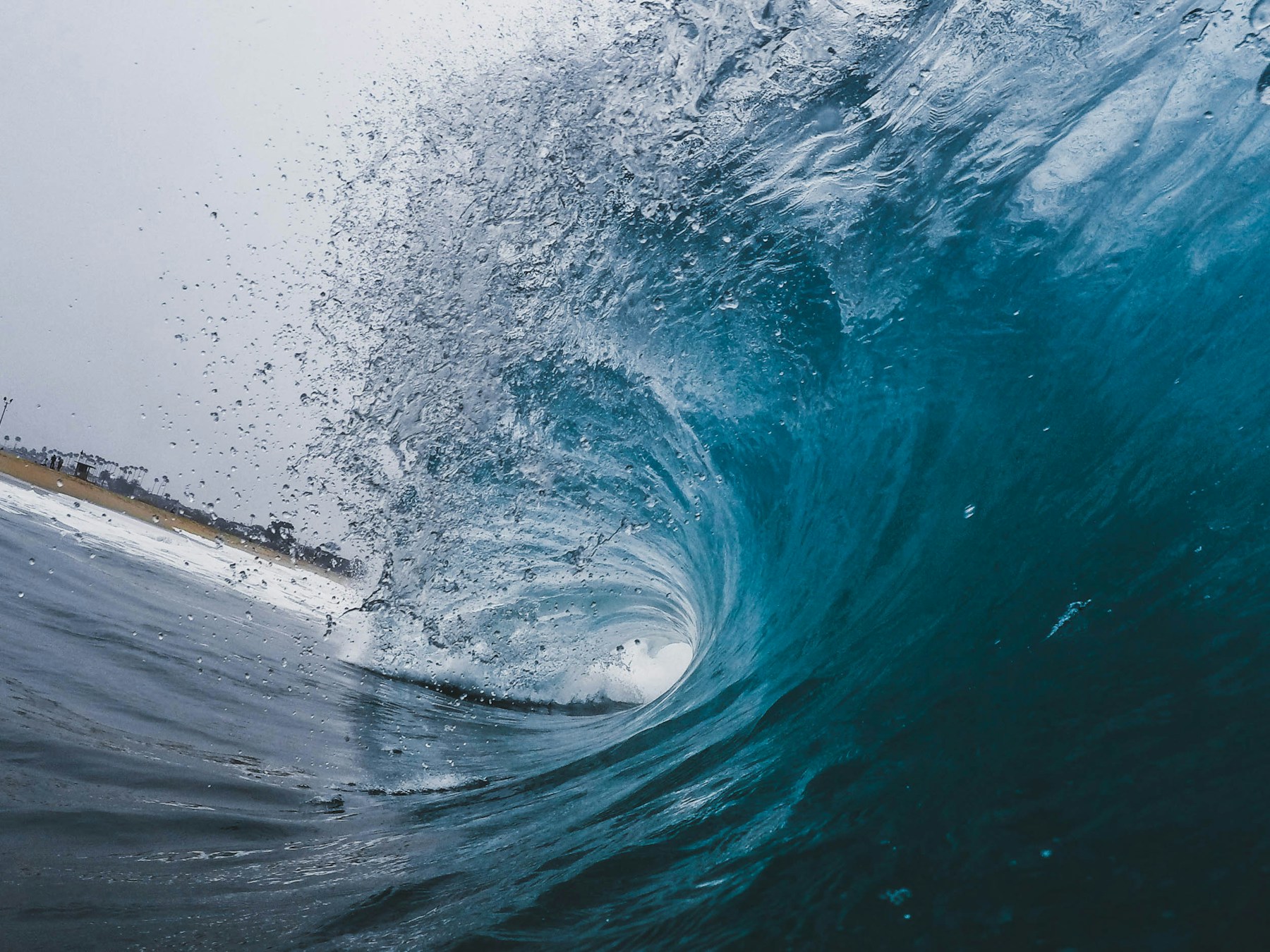
BETTER
QUESTIONS.
Rabbit holes worth riding.
Start with something you can see or feel. Follow it somewhere unexpected.
Same height. Different waves. ↗
Why a wave-height number only tells part of the story.
The ocean floor is a wave shaper. ↗
Contours, sandbars, and the geography behind a breaking wave.
A surfboard is a moving experiment. ↗
Rails, rocker, fins, and the geometry beneath your feet.
Same ocean.
Different rhythm.
A wave's period is the time between passing crests. Slide it. Watch the distance between crests change.
A simplified deep-water model. Not a surf forecast. The drawing spans 650 meters; wave height stays fixed to isolate spacing.
Go deeper ↗What the model assumes
Small-amplitude waves, no currents, and water deeper than roughly half the wavelength. g = 9.81 m/s². Crest speed c = L/T; deep-water group speed is c/2. Near shore, depth changes these relationships.
Devereux.
Our patch
of ocean.
Marblehead, MassachusettsRead the coast,
not just the number.
The same beach can feel like a different place from one session to the next. This journal will connect the daily surf report to the wind, swell, tide, and questions it leaves behind.
Open the field journal ↗The journal begins with a field guide. Live conditions and daily reports are not connected yet.
The water moves.
But what travels?
Start with NOAA’s short ocean-wave explainer. Then try following a patch of water while a wave passes: motion and energy are different stories.
Watch the NOAA wave explainer ↗